
About the artist
Where science, art, and nature meet.
I make original cyanotype prints that celebrate the beauty of wild spaces — capturing nature through a digital-free art form that is original, sustainable, and deeply connected to the landscapes from which it comes.
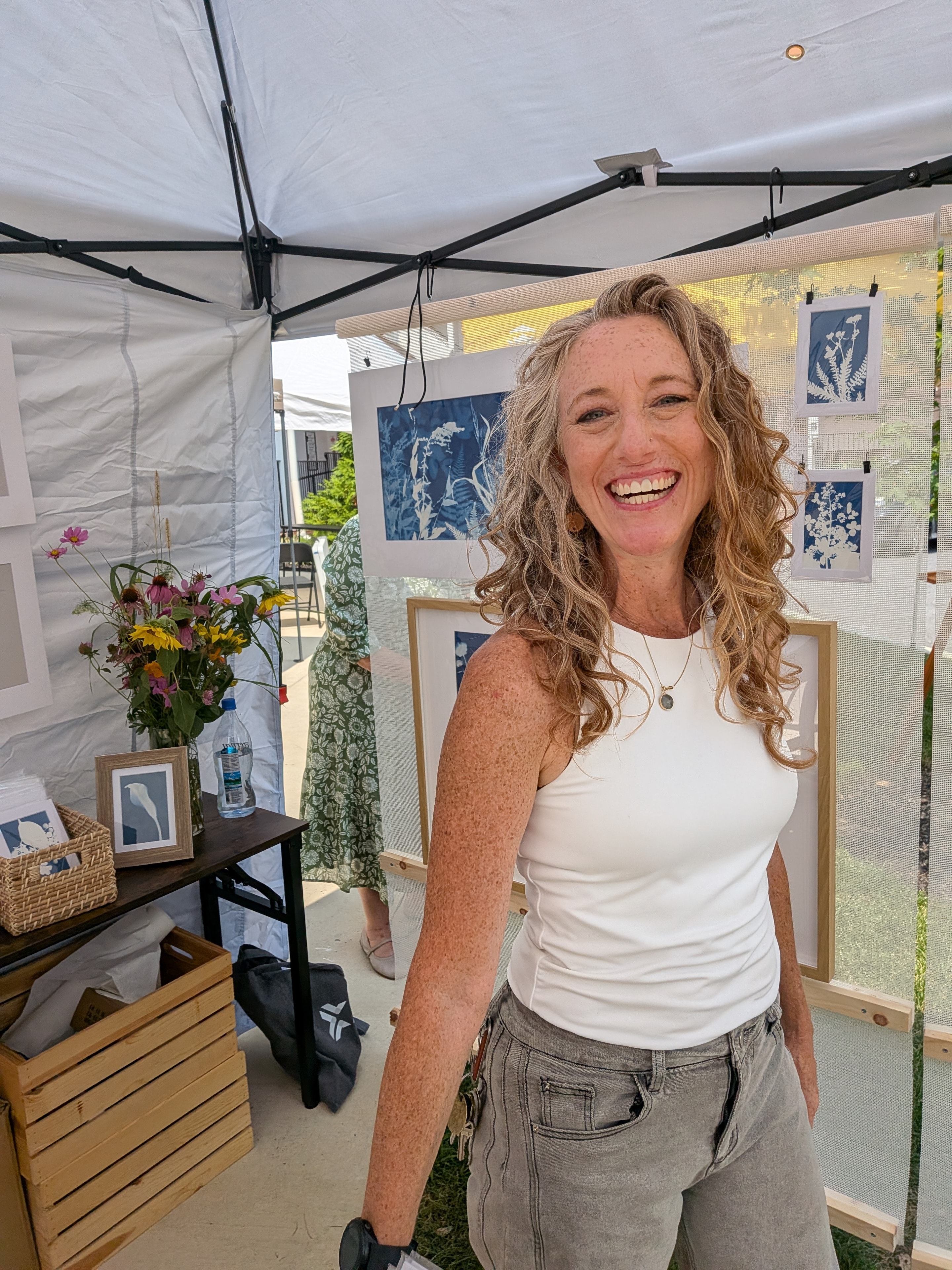
Artist, naturalist, chemist.
I make original cyanotype prints that celebrate the beauty of wild spaces. I capture nature through a digital-free art form, inviting light, chemistry, and the natural forms of each plant to shape each one-of-a-kind piece.
As an artist, naturalist, and chemist, I use a 200-year-old photographic process in which UV light transforms iron salts into the rich Prussian blue of cyanotype.
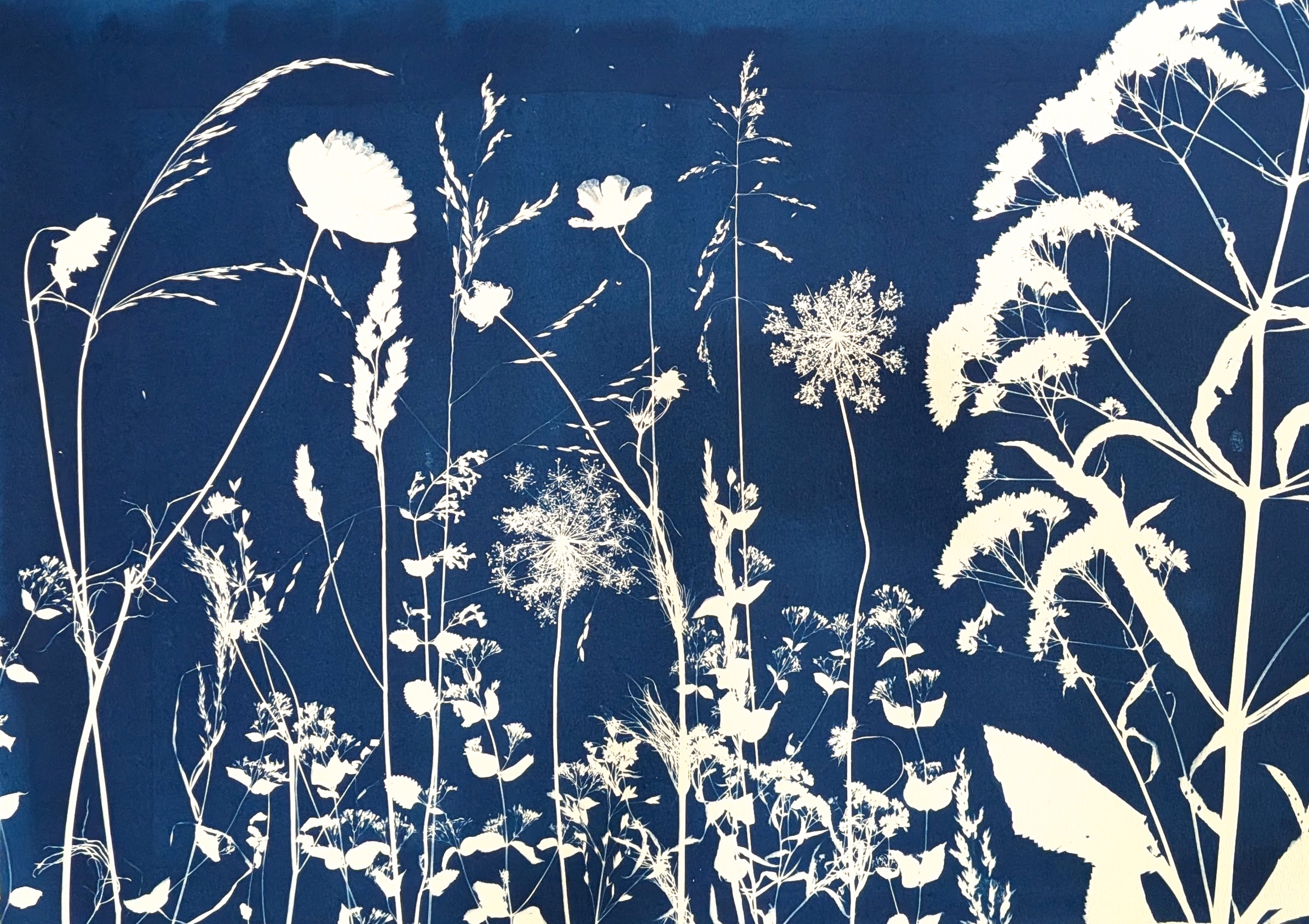
In an increasingly digital world, I create artwork that is original, sustainable, and deeply connected to the landscapes from which it comes. I create one-of-a-kind botanical prints using plants personally foraged from local wild spaces around Frederick, Maryland. Rather than reproducing photographs or digital artwork, each original composition is created by hand using the historic cyanotype process—one of the earliest forms of photography. Fresh botanicals are carefully arranged on hand-coated watercolor paper and exposed to natural sunlight, producing rich Prussian blue images that preserve the intricate details of every leaf, stem, and flower. As both a chemistry teacher and artist, I enjoy sharing the science behind the cyanotype process while creating work that encourages people to appreciate the beauty of native and often-overlooked plants. No two pieces are ever the same, making each artwork a truly original connection between nature, science, and art.
The process
Chemistry and light
Gather
I forage botanical specimens from wild spaces — ferns, wildflowers, grasses, and leaves — chosen for their form, texture, and the story they carry from the landscape. Fresh botanicals are carefully arranged on hand-coated watercolor paper and exposed to natural sunlight to preserve the intricate details of every leaf, stem, and flower.
Sensitize
Paper or fabric is coated with a solution of iron salts — ammonium ferric citrate and potassium ferricyanide — and dried in the dark. These iron salts will reduce when exposed to UV light, resulting in an insoluble iron complex, only to be later oxidized to ferric ferricyanide, or Prussian Blue.
The botanical specimens are arranged directly on the sensitized surface and exposed to UV light. Sunlight, followed by water does the development — no camera, no darkroom, no digital tools.
Reveal
The print is washed in water. The unexposed iron salts remain soluble and are rinsed away, and the reduced iron salts remain, only to oxidized into the rich Prussian blue of cyanotype.